




How to Start a Water Vending Business in Kenya?
Introduction
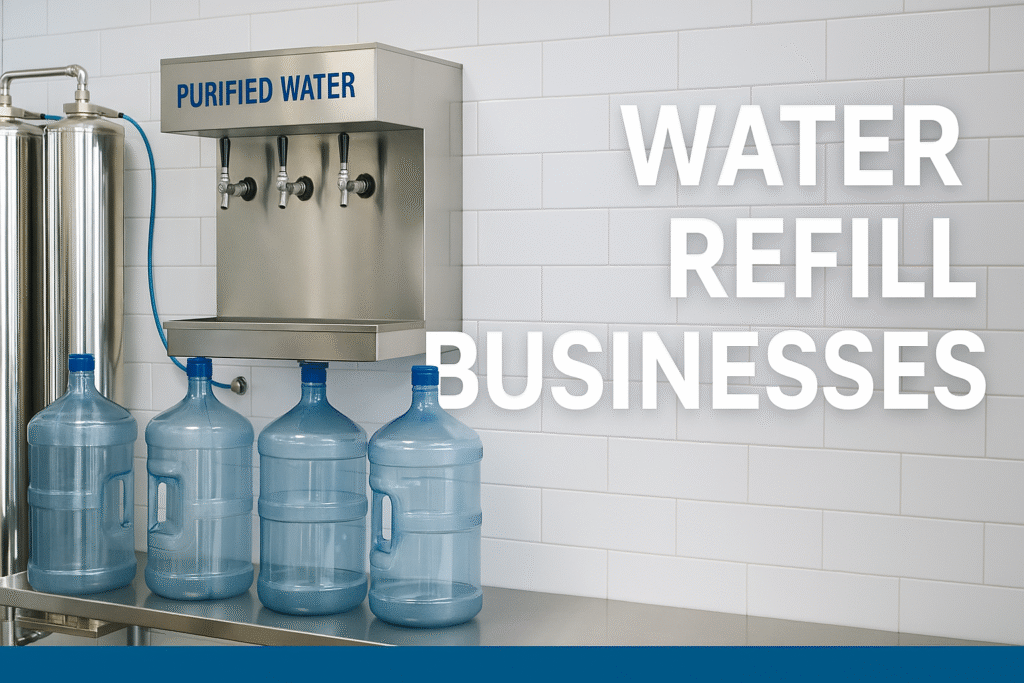
- The demand for clean and safe drinking water in Kenya continues to rise due to urbanization, unreliable municipal supplies, and health concerns.
- This has created a thriving opportunity for entrepreneurs through water vending businesses.
- With the right setup, water vending can be both profitable and socially impactful—helping communities access affordable purified water.
- House of Maji is one of Kenya’s trusted partners in helping individuals and groups set up efficient and sustainable water vending operations.
Step 1: Conduct Market Research
- Assess local demand: Identify high-population areas with limited access to safe water (e.g., estates, schools, markets).
- Check existing competitors: Study their pricing, water quality, packaging, and customer service.
- Understand water quality issues: Test the local water source to know which treatment technology to use; House of Maji offers testing and consultation services.
- Identify gaps: Find areas underserved by vendors or regions with inconsistent supply.
Step 2: Choose a Reliable Water Source
- Options include:
- Borehole water
- Municipal tap water
- Rainwater harvesting
- Purchased bulk water (from licensed suppliers)
- The chosen source determines the treatment equipment required.
- House of Maji technicians help design systems tailored to the specific source and water quality level.
Step 3: Set Up a Water Treatment System
- The heart of any water vending business is the treatment plant.
- Essential components may include:
- Pre-filtration units: Remove sand and large particles.
- Activated carbon filters: Eliminate odor, taste, and chlorine.
- Reverse Osmosis (RO) machine: Purifies water by removing 99% of contaminants.
- UV sterilizer or ozone unit: Kills bacteria and viruses.
- Storage tanks: For clean water and raw water separation.
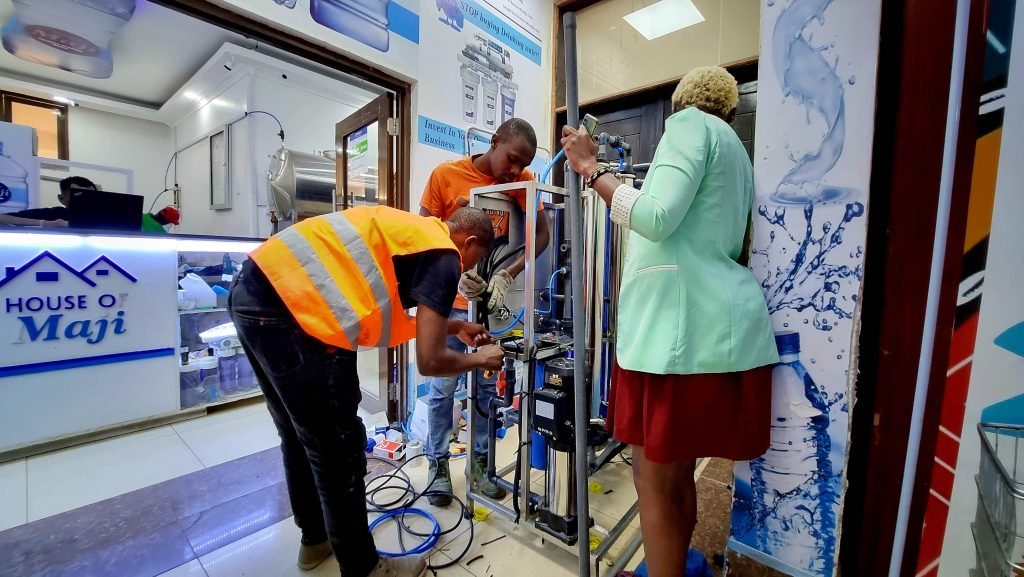
- House of Maji provides high-quality water treatment machines, installation, and maintenance support across Kenya.
Step 4: Acquire Business Licenses
- Register your business name with the Business Registration Service (BRS).
- Obtain a Single Business Permit from your local county government.
- Apply for a Public Health Certificate confirming your water meets safety standards.
- Get approval from KEBS (Kenya Bureau of Standards) if you intend to bottle your water.
- House of Maji can guide new entrepreneurs through the compliance and certification process.
Step 5: Set Up Your Water Vending Shop
- Location: Choose an accessible, visible, and high-traffic area.
- Design: Clean, organized, and branded space builds trust with customers.
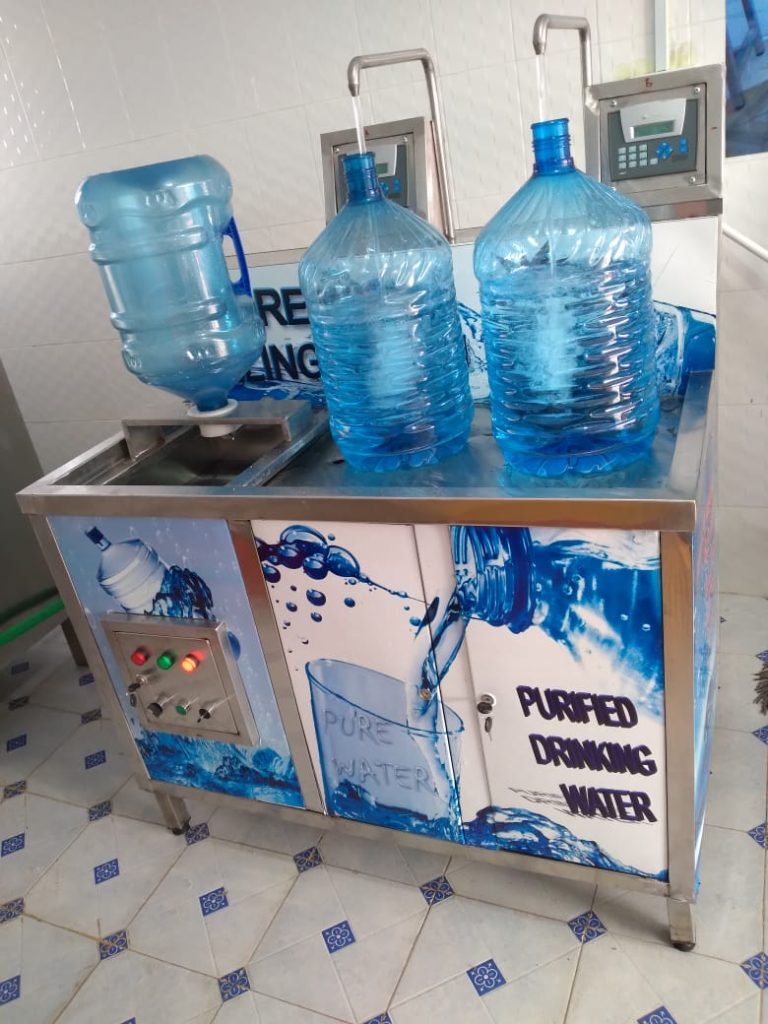
- Equipment: Include filling stations, storage tanks, labeling machines, and dispensing taps.
- Backup Power: Consider a generator or solar solution to maintain operations during outages.
- House of Maji also supplies accessories and refilling station setups ideal for small or large businesses.
Step 6: Marketing and Branding
- Brand identity: Create a unique name, logo, and slogan emphasizing purity and safety.
- Digital presence: Use social media to promote your services.
- Community trust: Offer free water testing or awareness days; House of Maji Foundation often supports such outreach initiatives.
- Customer service: Clean bottles, consistent pricing, and prompt service attract loyalty.
Step 7: Maintain Water Quality
- Regularly replace filters and membranes (as advised by House of Maji technicians).
- Keep storage tanks and dispensers sanitized.
- Conduct periodic lab tests to maintain certification and public trust.
- Document water testing results for transparency.
Profitability Tips
- Sell in multiple formats: refills, bottled water, and bulk deliveries.
- Offer home or office delivery services.
- Diversify by selling water accessories; dispensers, bottles, or coolers.
- Control costs by maintaining equipment regularly to prevent breakdowns.
- Partner with House of Maji for spare parts, maintenance, and technical upgrades.
Conclusion
- The water vending business in Kenya is a growing and sustainable venture that promotes both health and economic empowerment.
- With proper planning, clean operations, and reliable treatment systems, entrepreneurs can build trusted local brands.
- House of Maji remains a one-stop partner for equipment supply, installation, maintenance, and expert guidance.
- By combining business sense with a commitment to safe water, you not only earn income; but also make a difference in people’s lives.
Comments
0 Likes