




Reverse Osmosis Water Filter in Kenya: Everything You Need to Know
Walk into any restaurant or house these days, and chances are you’ll spot a reverse osmosis system under the sink or tucked away in a back room. Five years ago, RO was a luxury. Today, it’s becoming standard.
Why? Because Kenyans have realised that boiling water kills bacteria but does nothing for heavy metals, nitrates, or that weird metallic taste. And bottled water? Expensive and plastic-heavy.
But RO comes with questions. How often do you change the filters? Is the water actually healthy? And is it better than distilled?
Let me answer all of that – no jargon, no sales pitch, just what you actually need to know.
FIRST, WHAT DOES AN RO MACHINE ACTUALLY DO?
Reverse osmosis forces water through a super-fine membrane. Think of it like a microscopic sieve. It blocks almost everything that isn’t water – lead, arsenic, fluoride, nitrates, microplastics, salt, and even bacteria.
What comes out the other side is about 99% pure. No taste. No smell. No hidden nasties.
In Kenya, people install RO machines for two reasons:
1.Their tap or borehole water has high total dissolved solids (TDS).
2.They’re tired of buying bottled water.
Now, let’s get to your real questions.
1. HOW OFTEN SHOULD REVERSE OSMOSIS FILTERS BE CHANGED?
This is the most common question – and the most ignored. People buy an RO machine, love the water, then forget maintenance exists. Then one day, the water tastes funny again, and they wonder why.
Here’s the honest schedule:
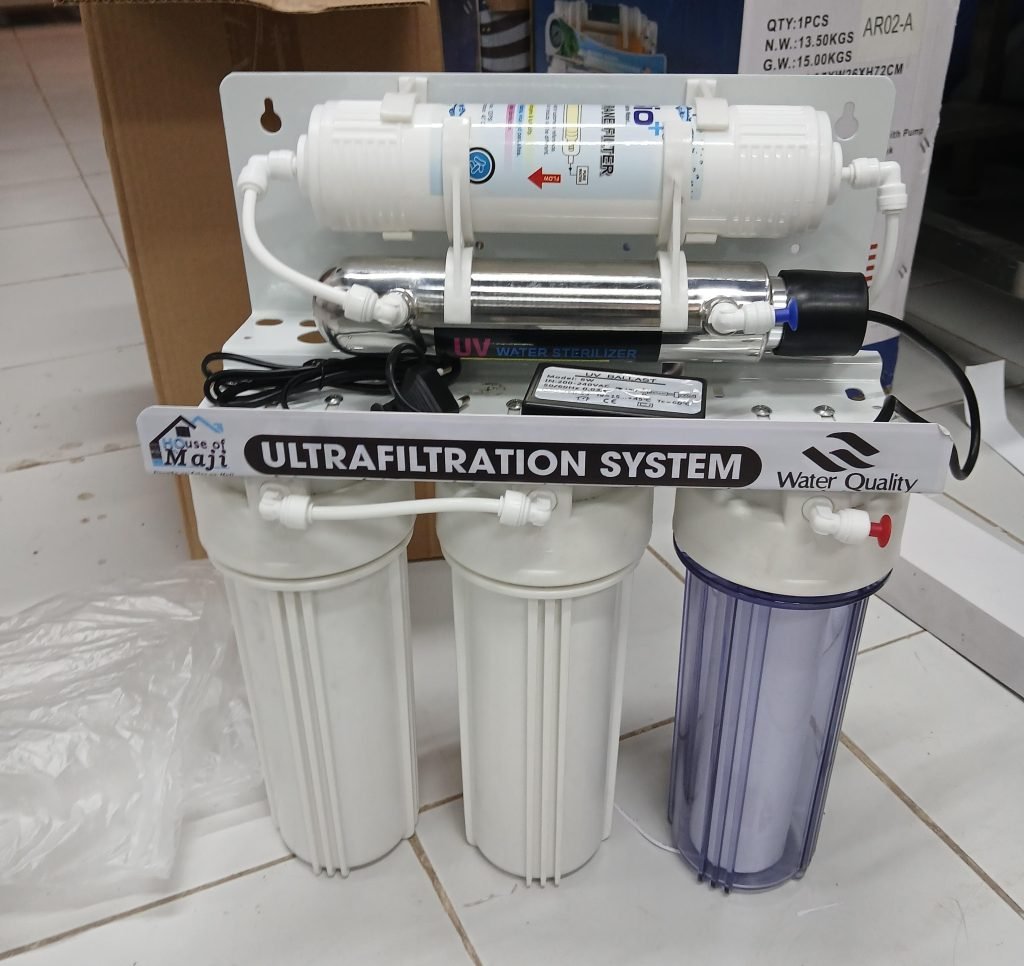
Pre-filters (sediment and carbon): Every 6–12 months. These protect the expensive membrane by removing sand, chlorine, and dirt first.
RO membrane: Every 2–3 years. You’ll know it’s tired when water production slows down or TDS creeps up.
Post-filter (polishing carbon): Every 12 months. This gives water that final clean taste before it hits your glass.
Real talk for Kenyan homes: If your water is very dirty or high in chlorine, change pre-filters closer to 6 months. Ignoring changes costs you more in the long run – a damaged membrane is expensive to replace.
For businesses (hotels, restaurants, coffee shops): Change on a strict schedule. One neglected filter can ruin a whole batch of product or shut down your kitchen. Keep a log. Your future self will thank you.
2. WHAT IS THE HEALTHIEST TYPE OF FILTER WATER?
This question starts fights in water treatment circles. But let me give you the simple, evidence-based answer.
The healthiest water is contaminant-free water that still contains natural minerals – or has minerals added back in.
Here’s the breakdown:
Straight RO water: Extremely pure. Removes almost everything – including harmful metals AND beneficial minerals like calcium and magnesium. Is that unhealthy? For most healthy adults, no. You get minerals from food. But some people find RO water tastes “flat” or “empty.”
Remineralised RO water: This is RO water that passes through one final filter that adds back small amounts of calcium, magnesium, and potassium. Many premium RO machines now include this. Tastes better. Mineral content restored. This is arguably the healthiest option.
Carbon-filtered water: Leaves minerals intact but does not remove heavy metals. Good for city water with chlorine only. Not enough for borehole or high-TDS water.
Is RO Water Better Than Distilled Water?
This is a classic comparison. Both are very pure. But they’re made differently, and the difference matters.
| Feature | RO Water | Distilled Water |
|---|---|---|
| How it’s made | Pushed through a membrane | Boiled and condensed |
| Energy use | Low | High (uses electricity to boil) |
| Speed | Fast | Slow |
| Removes minerals | Yes (99%) | Yes (100%) |
| Removes chemicals | Yes | Yes (except volatile ones that boil at lower temps) |
| Taste | Clean, sometimes flat | Flat, sometimes “cooked” |
| Cost to produce | Low | Higher (electricity + time) |
| Available in Kenya | Widely available (House Of Maji) | Less common (specialised equipment) |
Which is better? For drinking every day, RO wins hands down. Distilled water is great for medical devices (CPAP machines, steam irons, car batteries) but tastes lifeless for drinking. RO gives you nearly the same purity at a fraction of the energy cost and without that flat, boiled taste.
What About Commercial RO Machines for Businesses?
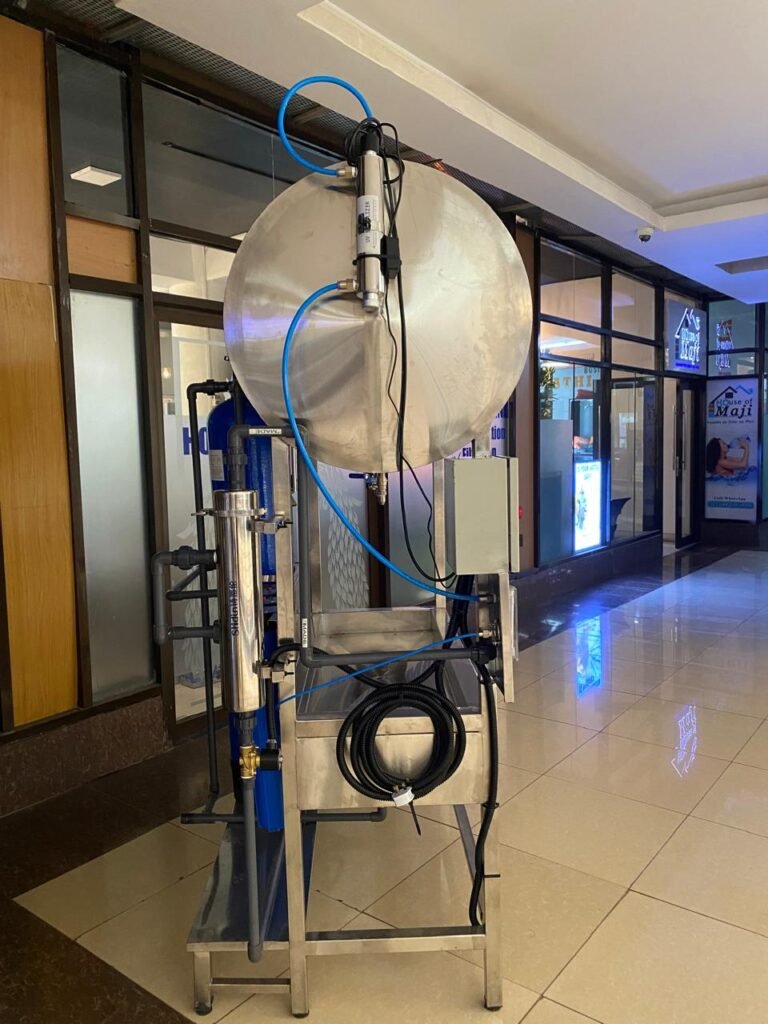
Homes need an undersink RO machine. But businesses – hotels, restaurants, coffee shops, bakeries, factories – need something much bigger.
A commercial RO machine is built for volume. Instead of 10–15 litres per day, a commercial system produces hundreds or thousands of litres daily. These machines have:
- Larger pre-filters (handles dirtier incoming water)
- Bigger membranes (multiple membrane housings)
- Higher flow rates (no waiting for water)
- Industrial control valves (automated backwashing and monitoring)
- Storage tanks (so water is ready when you need it)
Who needs commercial RO in Kenya?
- Hotels: For guest drinking water, kitchen use, and laundry.
- Coffee shops: Consistent water makes consistent espresso. Hard water ruins machines.
- Bakeries: Water quality affects dough and steam ovens.
- Bottling plants: Self-explanatory.
- Schools and hospitals: Large-scale safe drinking water.
- Clients looking to start a water refill business
A commercial machine is an investment. But one prevented equipment breakdown or one avoided health violation pays for it quickly.
If you already have a water test report, send it over to us(House of Maji). If you don’t, ask how to get one. Either way, we’ll tell you straight – even if the answer is “you don’t need RO at all.”
That’s not a sales tactic. That’s just how good water treatment works.
Stay hydrated – the right way.
Just remember three things:
- Change your filters on schedule.
- Test your water before buying a machine.
- Buy from someone who asks to see your results – not someone who sells the same machine to everyone.