




What is the most common water treatment?
Turn on your tap. Water comes out. You assume it is safe.
But somewhere, before that water reached your home, it went through a process. A treatment. Something that turned raw, dirty water into something you are willing to drink, cook with, and bathe in.
So what is the most common water treatment in the world? And more importantly, is it enough for your home or business in Kenya?
Let me answer that question clearly, then show you what most people get wrong – and where companies like House of Maji come in.
The Top 4 Most Common Water Treatment Methods
Depending on where you live and what is in your water, different methods are used. Here are the four most common worldwide – and in Kenya.
1. Chlorination (Most Common Overall)
What it does: Kills bacteria, viruses, and some parasites.
What it misses: Heavy metals, dissolved solids, pesticides, microplastics, taste and odour compounds.
Used for: Municipal city water (Nairobi Water, etc.). Also used for emergency treatment after floods.
Limitation: Does not make water “clean” – just biologically safe. And some people dislike the swimming pool taste.
2. Filtration (Sediment + Carbon) – Most Common for Homes
What it does: Traps dirt, rust, and sand (sediment filter). Absorbs chlorine, bad tastes, and smells (carbon filter).
What it misses: Bacteria, heavy metals, dissolved solids.
Used for: City water homes that want better taste and clearer water. Also used as a first stage before other treatments.
Limitation: Does not kill germs. Does not remove lead or arsenic.
3. Reverse Osmosis (RO) – Most Common for High Purity
What it does: Removes 99% of all contaminants – heavy metals, nitrates, fluoride, microplastics, salt, and most bacteria.
What it misses: Nothing significant – but it also removes healthy minerals unless you add a remineralisation stage.
Used for: Homes with high TDS, borehole water with heavy metals, and water refill businesses.
Limitation: Wastes some water. Slower than other methods. Needs regular filter changes.
4. UV Treatment – Most Common for Borehole Water
What it does: Uses ultraviolet light to neutralise bacteria and viruses instantly.
What it misses: Heavy metals, chemicals, taste, sediment, hardness.
Used for: Borehole or rainwater tanks where biological contamination is the main concern.
Limitation: Water must be clear (needs pre-filtration). Does nothing for chemical pollution.
So Which One Is Actually the Most Common for Kenyan Homes?
That depends on your water source.
| If your water comes from… | The most common treatment is… |
|---|---|
| Nairobi City Water (chlorinated) | Carbon filtration (to remove chlorine taste and sediment) |
| A borehole without bacteria | Sediment + carbon filtration (and test for heavy metals) |
| A borehole with bacteria | UV treatment (plus sediment filter first) |
| A home with hard water (scale) | Water softener (often combined with filtration) |
| A home wanting bottled quality | Reverse osmosis (usually undersink) |
The true most common water treatment for Kenyan homes that have any treatment beyond city chlorination is sediment + carbon filtration. It is affordable, easy to maintain, and fixes the two biggest complaints: bad taste and visible dirt.
But if you have borehole water or high TDS, the most common shifts to reverse osmosis.
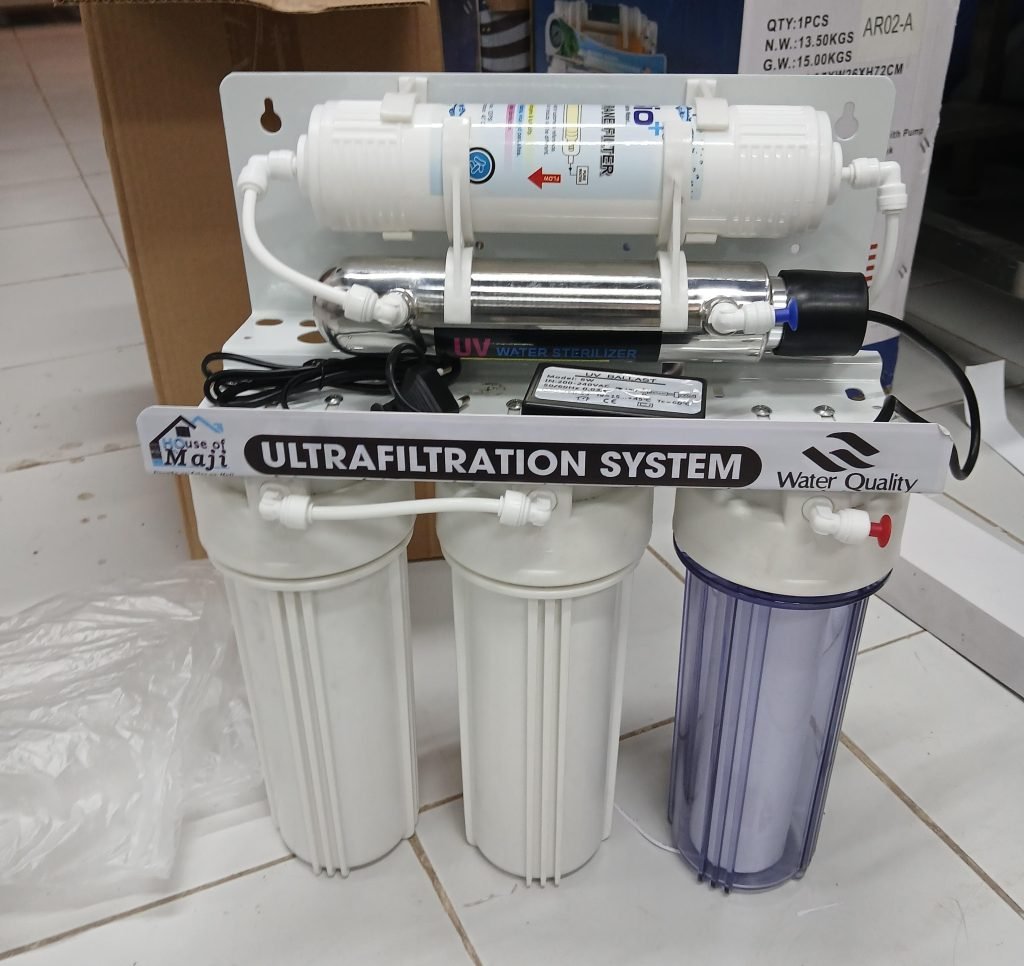
Why House of Maji Is the Best Company to Visit When Looking for Water Treatment Machines
1. They Do Not Sell Blindly – They Test First
The biggest mistake in water treatment is guessing. House of Maji starts every project with certified water analysis – scientific testing of physical, chemical, and microbiological properties. They will not sell you a machine until they know what is actually in your water.
2. They Have Real Local Experience – With Numbers to Prove It
Their track record speaks for itself:
- 97+ homes installed
- 44+ water refill businesses supported
- 15+ schools
- 12+ hotels
- Multiple hospitals
3. They Answer the Phone (and Chat)
Their website has a live chat feature. A real engineer typically replies within minutes. Try finding that with other water treatment companies in Kenya.